
Table of Contents
ToggleDubai remains one of the most sought-after travel destinations in the world, offering a unique blend of futuristic architecture, cultural heritage, and luxury shopping. As international travel continues to evolve in 2026, the process for visiting the United Arab Emirates has become increasingly digital and efficient. If you are planning a vacation to this desert metropolis, knowing exactly how to apply for a Dubai visa for tourists is the first step toward a stress-free holiday.
The UAE government has introduced several visa categories to accommodate different types of travelers, from short-term transit passengers to those seeking a long-term multiple-entry stay. Most applications are now handled through online portals, airlines, or licensed travel agencies, making the “visa sticker” in the passport a thing of the past for many. This guide provides the most current information to help you navigate the application landscape with ease.
Identifying the Right Tourist Visa Category
The first step in your journey is determining which visa type matches your travel plans. In 2026, the UAE offers a variety of options, including the 30-day and 60-day single-entry or multiple-entry visas. A single-entry visa is perfect for a one-time holiday, while frequent travelers often prefer the multiple-entry option to move between Dubai and neighboring countries like Oman or Saudi Arabia.
For those looking for a longer commitment, the 5-year multiple-entry tourist visa is a popular choice. This self-sponsored visa allows you to enter the country multiple times over five years, staying up to 90 days per visit. It is an excellent option for people who have family in the city or business interests that require regular visits.
How to Apply for a Dubai Visa for Tourists Through Airlines
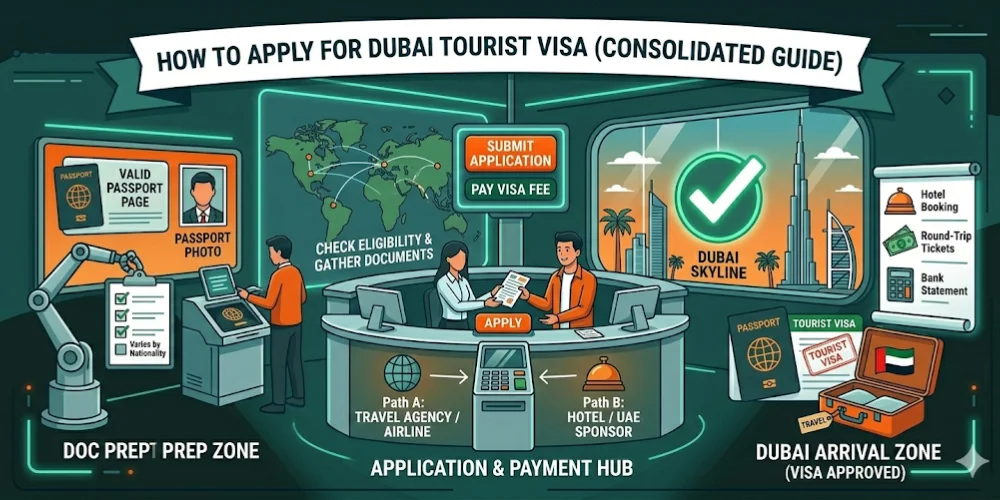
One of the most convenient ways to secure your entry permit is through UAE-based carriers like Emirates, FlyDubai, or Etihad Airways. If you have booked a flight with these airlines, they can act as your sponsor and handle the application process on your behalf. This is often the preferred method for many travelers because it links your flight booking directly to your visa status.
To start this process, you simply log into the “Manage Booking” section on the airline’s official website after purchasing your ticket. You will be prompted to upload digital copies of your passport and a recent photograph. The airline then submits the request to the immigration authorities, and you usually receive your electronic visa via email within 48 to 72 hours.
Read More – How to Apply for Dubai Residency Visa
Utilizing Authorized Travel Agencies and Hotels
If you prefer a package deal or are staying at a major hotel chain, you can ask your service provider how to apply for a Dubai visa for tourists through their channels. Licensed travel agencies in your home country or within the UAE are authorized to apply for tourist visas for their clients. This is often a great route if you want someone to double-check your documents before submission.
Hotels in Dubai also have the authority to apply for visas for their guests, provided you have a confirmed reservation. However, keep in mind that the visa is typically tied to your stay at that specific hotel. If you decide to change your accommodation plans, it could complicate your visa status. Always verify the terms and conditions with the hotel’s reservation team before proceeding.
Standard Requirements and Documentation for 2026
The documentation required for a Dubai tourist visa is straightforward but must be precise to avoid rejection. You will need a clear, color scan of your passport’s bio page, and your passport must be valid for at least six months from your intended date of entry. A recent passport-sized photograph with a white background is also mandatory.
In 2026, immigration authorities have placed a stronger emphasis on travel insurance. You must have a policy that covers healthcare and emergencies within the UAE for the duration of your stay. Additionally, some nationalities may be required to show proof of a return flight ticket and a hotel booking or an invitation letter from a host residing in Dubai to demonstrate where they will be staying.
Applying for the 5-Year Multiple-Entry Tourist Visa
The 5-year multiple-entry visa is a self-sponsored category that does not require a local host or airline sponsorship. To apply for this, you must use the official ICP (Federal Authority for Identity, Citizenship, Customs & Port Security) website or mobile app. This visa is open to all nationalities and is a game-changer for those who visit the region frequently.
The key requirement for this long-term visa is proof of a bank balance of at least $4,000 (or its equivalent in other currencies) during the last six months. You will need to upload your bank statements alongside your passport and insurance details. While the upfront cost is higher than a standard 30-day visa, the convenience of not having to re-apply for every trip makes it highly cost-effective over time.
Visa on Arrival: Is Your Nationality Eligible?
Before spending money on an application, check if you are eligible for a visa on arrival. Citizens of many countries, including the UK, USA, Canada, and several European and East Asian nations, can simply walk to the immigration counter upon landing and receive a free entry stamp. The duration of stay for these stamps typically ranges from 30 to 90 days depending on your citizenship.
Indian citizens with a valid US visa or Green Card, or those with a UK or EU residence permit, are also eligible for a 14-day visa on arrival for a small fee. This flexibility is part of Dubai’s effort to remain the most accessible global hub for tourism. Always check the latest list of eligible countries on the GDRFA (General Directorate of Residency and Foreigners Affairs) website before you fly.
Understanding Fees and Processing Timelines
The cost of a tourist visa varies depending on the duration and the number of entries. A standard 30-day single-entry visa generally costs between $80 and $100, while a 60-day visa may range from $150 to $200. Express processing is available for an additional fee if you need your visa within 24 hours.
Standard processing usually takes 3 to 5 working days. It is wise to apply at least two weeks before your travel date to account for any public holidays in the UAE or unexpected requests for additional information. Once approved, your visa is sent as a PDF; make sure to print a copy and keep a digital version on your phone to show at the check-in counter and immigration.
Tips for a Successful Application Process
To ensure your application is approved without delay, double-check that your passport scans are high-resolution and not blurry. Any cropped edges or glares on the passport page can lead to an automatic rejection by the AI systems used for initial screening. Ensure your photo meets the 80% face coverage rule and has no shadows.
Another important tip is to ensure your name on the visa application matches your passport exactly. Middle names are often a source of confusion; if it is on your passport, it should be on your application. If you have been to the UAE before, ensure that your previous visa was properly cancelled or has expired before applying for a new one to avoid a system conflict.
Entering Dubai: What to Expect at Immigration
When you arrive at Dubai International Airport (DXB), the process is remarkably fast. If you have a pre-arranged electronic visa, the immigration officer will scan your passport and take a quick retinal scan (iris recognition). This digital biometric data is linked to your entry and helps speed up future visits through the airport’s “Smart Gates.”
Be prepared to show your return ticket and proof of accommodation if asked. While not every traveler is questioned, having these documents ready shows you are a genuine tourist. Once the officer clears you, you will receive an entry stamp or a digital notification of your entry. From there, you are free to head to the baggage claim and start your Dubai adventure.
FAQs
Can I extend my Dubai tourist visa while I am in the city?
Yes, most tourist visas can be extended for an additional 30 days twice without leaving the country. You can apply for this extension through the same agency or airline that issued your original visa, or via an “Amer” center. It is important to apply for the extension at least a few days before your current visa expires to avoid overstay fines.
Is travel insurance mandatory for a Dubai tourist visa?
Yes, travel insurance with UAE coverage is a mandatory requirement for all tourist visa applications in 2026. Your insurance must cover the entire duration of your stay and include emergency medical expenses. Many airlines offer insurance as an add-on during the visa application process.
What are the fines for overstaying a tourist visa in Dubai?
The UAE has strict rules regarding overstays. If you stay past your visa’s validity, you will be required to pay a fine for each day you remain in the country. Additionally, you may need to obtain an “outpass” or exit permit to leave. Repeated or lengthy overstays can lead to being blacklisted from future entry into the UAE.
How do I apply for a Dubai visa for tourists if I am a freelancer?
Freelancers can apply for a tourist visa through the same channels as any other traveler—airlines, travel agencies, or the 5-year multiple-entry self-sponsored route. If you are applying for the 5-year visa, your bank statements will serve as the primary proof of your financial status rather than an employment letter.
Do children need a separate visa for Dubai?
Yes, every individual traveling to Dubai, including infants and children, must have their own visa. The requirements and fees are generally the same as for adults. If you are applying through an airline, you can usually add family members to a single group application.